The AI-Augmented Intensivist · Mayo Critical Care Bootcamp
3:00 a.m. · general floor — not the ICU

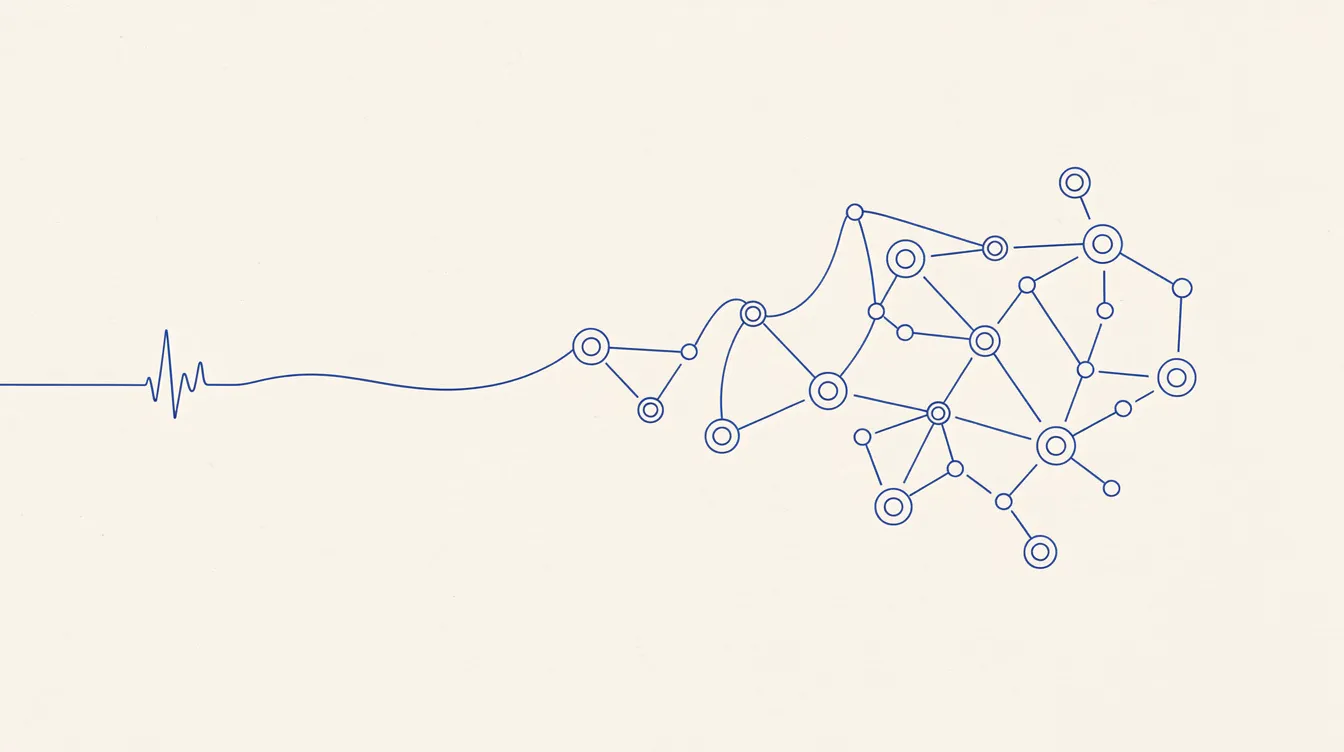
It arrived without
anyone looking

RR drifted 16→22, O₂ creeping up — charted, but unseen.

The AI-Augmented
Intensivist

AI agents, patient deterioration,
and the future ICU attending

A field guide for the start of your fellowship

Anirban Bhattacharyya, MD, MPH, MS · Mayo Clinic
Critical Care Bootcamp · 2026
Where I want us to land

01
Tell a model from a true agent
02
Know the famous failures — and the rules they taught
03
Recognize automation bias before it recognizes you
04
Leave convinced: your job is bigger, not smaller

One idea, three acts

Senseperceive deterioration continuously Reason & actact only under hard limits it cannot cross Governa skeptical human stays in command — this one is yours

These three words are the three acts of this talk.

Act I

From prediction
to agency

…and the two famous mistakes that taught us how to build.
Four eras of medical AI

Prediction Decision agents Ambient sensing Agentic loops

Each era added power — and a brand-new way to fail.

A model is not an agent

A MODEL Input Model Output one input → one answer. It predicts. A risk score that pages you is a model. AN AGENT Perceive Reason Act Observe hard safety limits perceive → reason → act → observe — in a loop. The loop + the hard limits around it — that is the agent.
Cautionary tale #1

The Epic Sepsis Model

  • Proprietary EWS, switched on at hundreds of US hospitals
  • Shipped with internal AUC in the high 70s–low 80s
  • Years at scale — almost no independent external check
  • 2021, Michigan: ~38,000 hospitalizations externally validated
switched on, quietly, at national scale — for years, with no independent check
External AUC
0.63
  • Missed ~⅔ of sepsis at the deployed threshold
  • …while causing massive alert fatigue
0.5 0.8 high 70s–low 80s internal claim 0.63 external validation AUC · 0.5 = coin flip
Lesson 1 — validate externally. It’s the price of admission: internal accuracy is a hypothesis, not a result.

Wong et al., JAMA Intern Med 2021 · ~38,000 hospitalizations

Cautionary tale #2

The AI Clinician

2018 · Nature Medicine
An RL agent learns fluid & vasopressor strategy from tens of thousands of septic patients.
“Matching the AI → lowest mortality” — it sounded like the machine had out-reasoned the doctors.
Then the field did its job · Gottesman · Jeter
Off-policy evaluation is treacherous: the estimates were fragile — and prone to rewarding the agent for agreeing with whoever survived.
Same agent flattering estimator honest estimator “superhuman” “unproven — claim honestly”
Lesson 2 — how a system is scored can flatter it. Claim honestly — remember this when a vendor shows you a beautiful number.
Act II

Deterioration:
the proving ground

The problem ICU AI was actually made for.
Not a prediction problem —

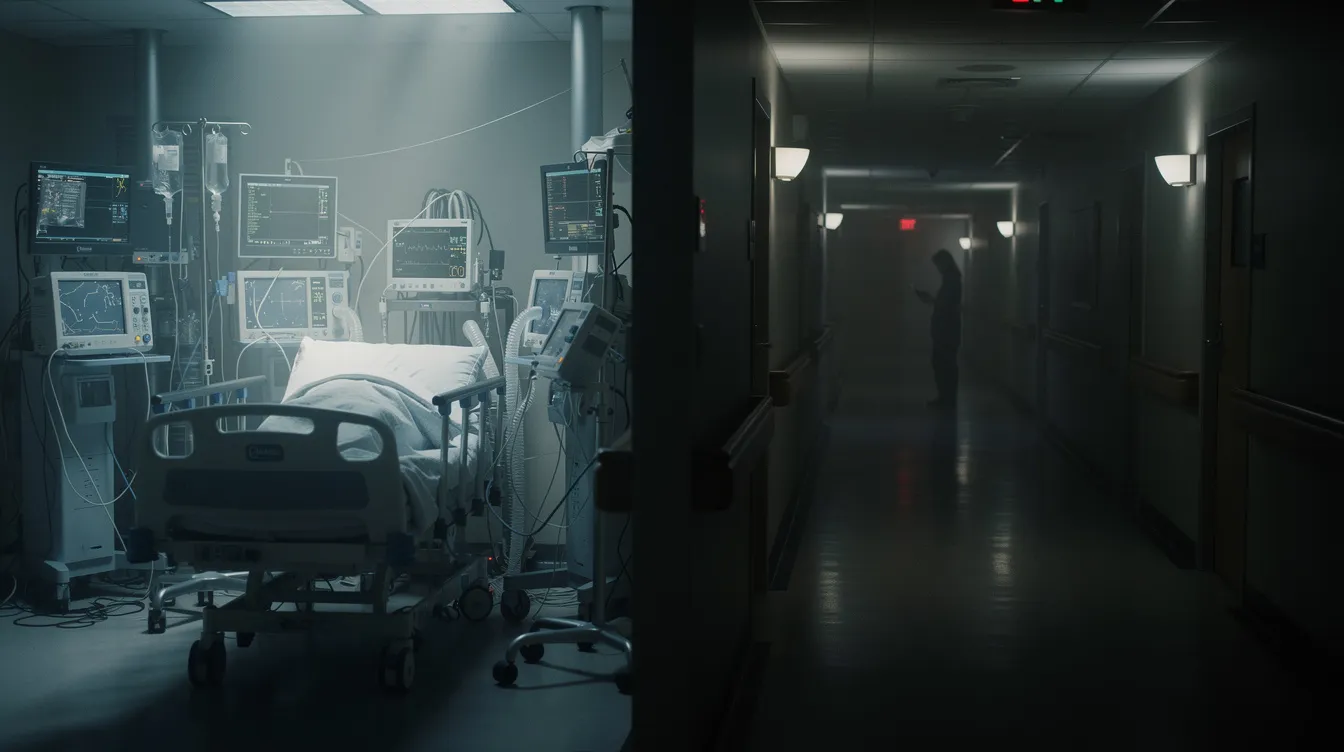
Deterioration is an attention problem

Vitals drift for hours before arrest — the signal is almost always already there.

ICU: continuous monitoring, 1:2 nursing  ·  Floor: vitals q4h — if workload allows.

Physiology doesn’t change at the threshold — only who’s watching.
The earliest signal, measured worst

hours before arrest → arrest RR · work of breathing — shifts first SpO₂ · HR · BP — move late q4h vitals checks — the only moments anyone looks
  • Among the best predictors of deterioration — captured worst: by eye, estimated, skipped, carried forward
  • Contactless monitoring (camera · radar · depth) is now a real literature — we’re testing it on the floors here
Principle: make sensing continuous where the eyes are thinnest.

TREWS & COMPOSER: adoption is the science

TREWS · sepsis EWS · prospective
−3.3 pts≈ −18.7% relative mortality
5 hospitals · >500,000 patients monitored · benefit when a clinician confirmed the alert <3 h
~90% of alerts evaluated · ~⅓ confirmed — the benefit lived in the human loop
COMPOSER · UC San Diego
−1.9 ptssepsis mortality (17% relative)
Deliberately engineered to stay quiet when unsure — so it wouldn’t bury nurses in false alarms
before–after emergency-department deployment study
The unit is model + human + workflow — never the model alone.

Adams et al. & Henry et al., Nat Med 2022 · Boussina et al., npj Digit Med 2024

The danger isn’t a wrong model —
it’s a good one that makes us stop thinking

73% clinicians alone ≈62% + biased AI −11 pts +2.3 explanations (n.s.)
  • Automation bias is measured, not hypothetical — Jabbour, JAMA 2023, diagnosing respiratory failure
  • Showing the model’s explanation didn’t rescue them — +2.3 pts, not significant
  • Dataset shift (Finlayson, NEJM): models silently degrade as the world drifts
Failure mode of the decade: a quietly wrong model, trusted by people who stopped checking.

Act 2, distilled: six rules

RULE 01
Actionability over accuracy — a confirmed alert beats a brilliant one
RULE 02
Validate externally — always
RULE 03
Stay calibrated — and auditable
RULE 04
Safety as architecture, not afterthought
RULE 05
Monitor for drift — the world moves under your model
RULE 06
Keep a human in command

Six rules — each paid for, in advance, by a study we just walked through.

Act III

The human test

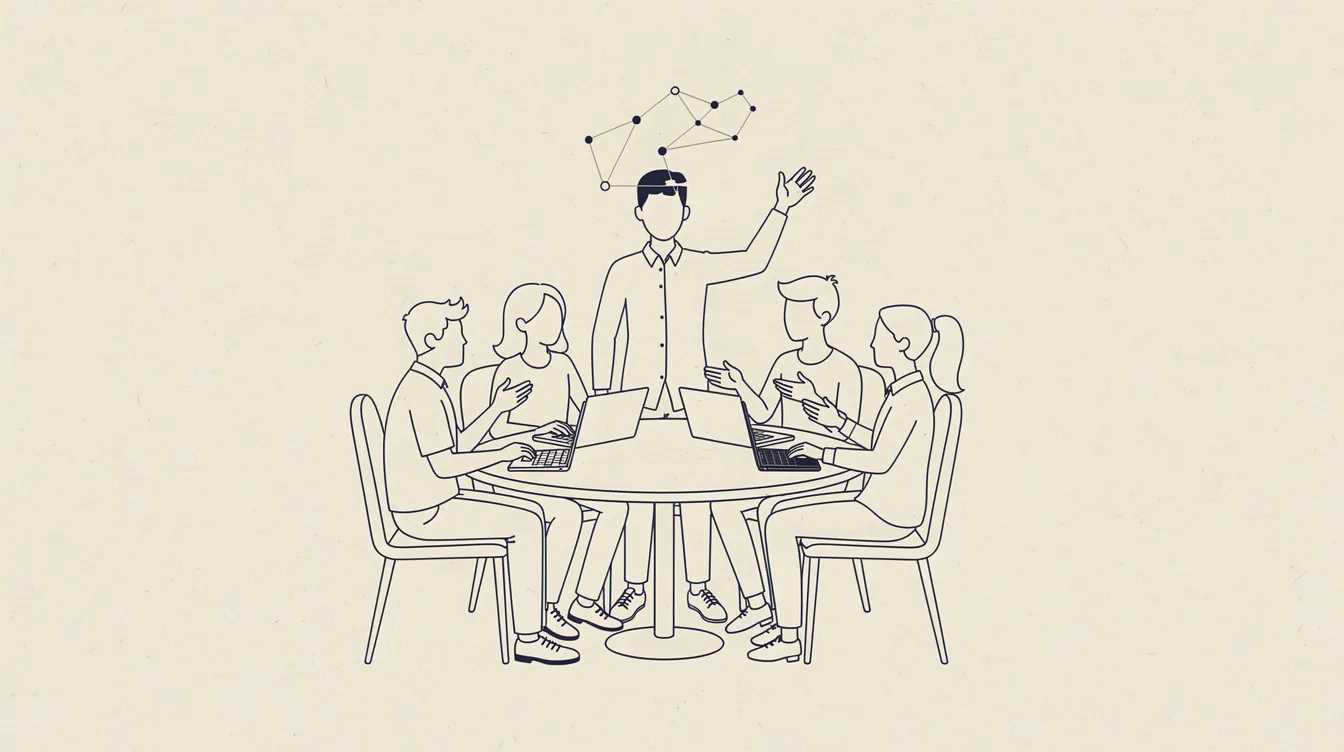
What happened when we gave 72 people frontier AI for 48 hours — and logged every keystroke.

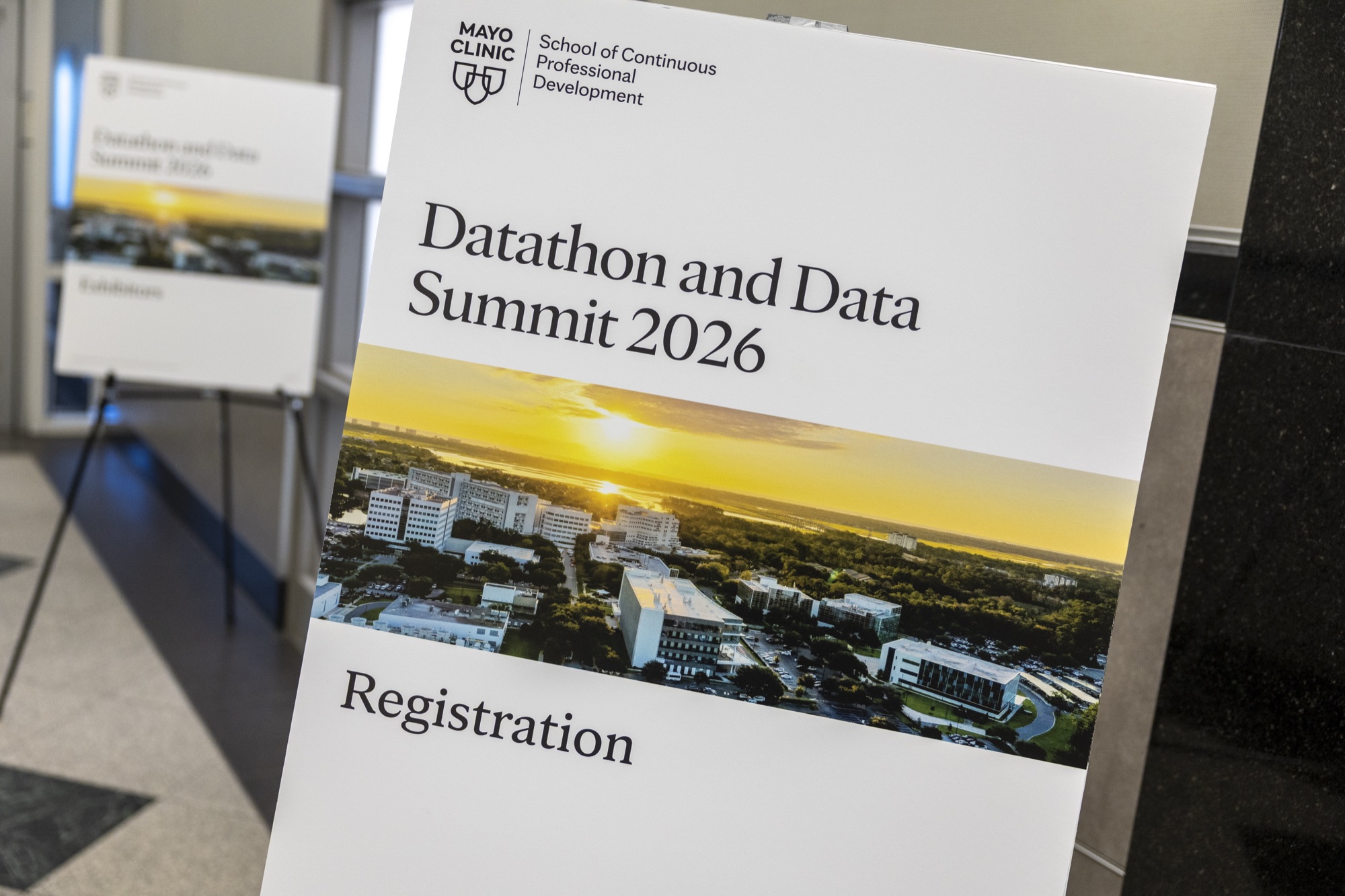
The experiment: the 2026 Mayo Datathon
72
participants
9
teams — each with a patient rep
48
hours
13,043
SQL queries, identity-resolved
593
data-agent prompts
~20 TB
MIMIC-IV + eICU
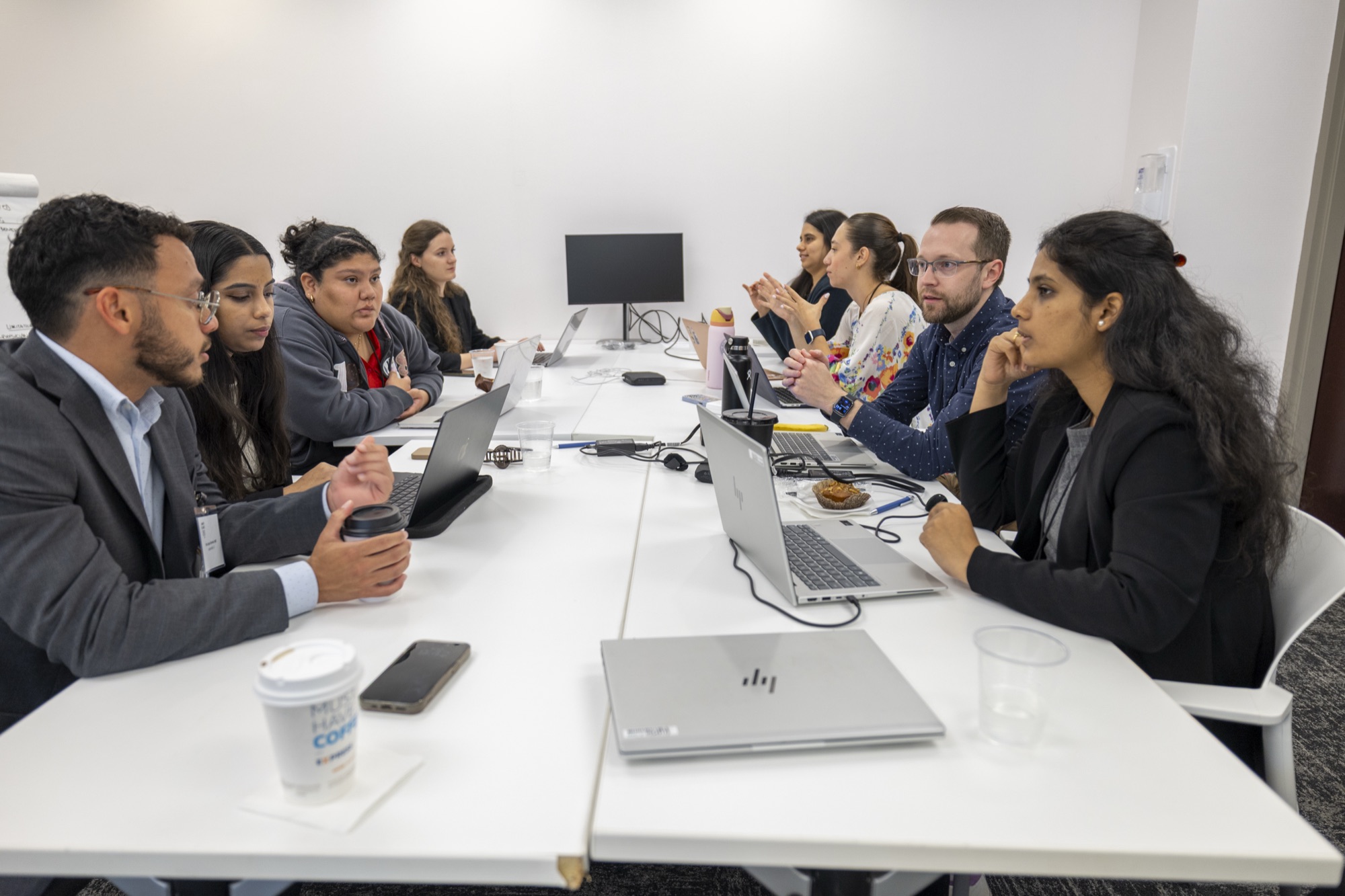
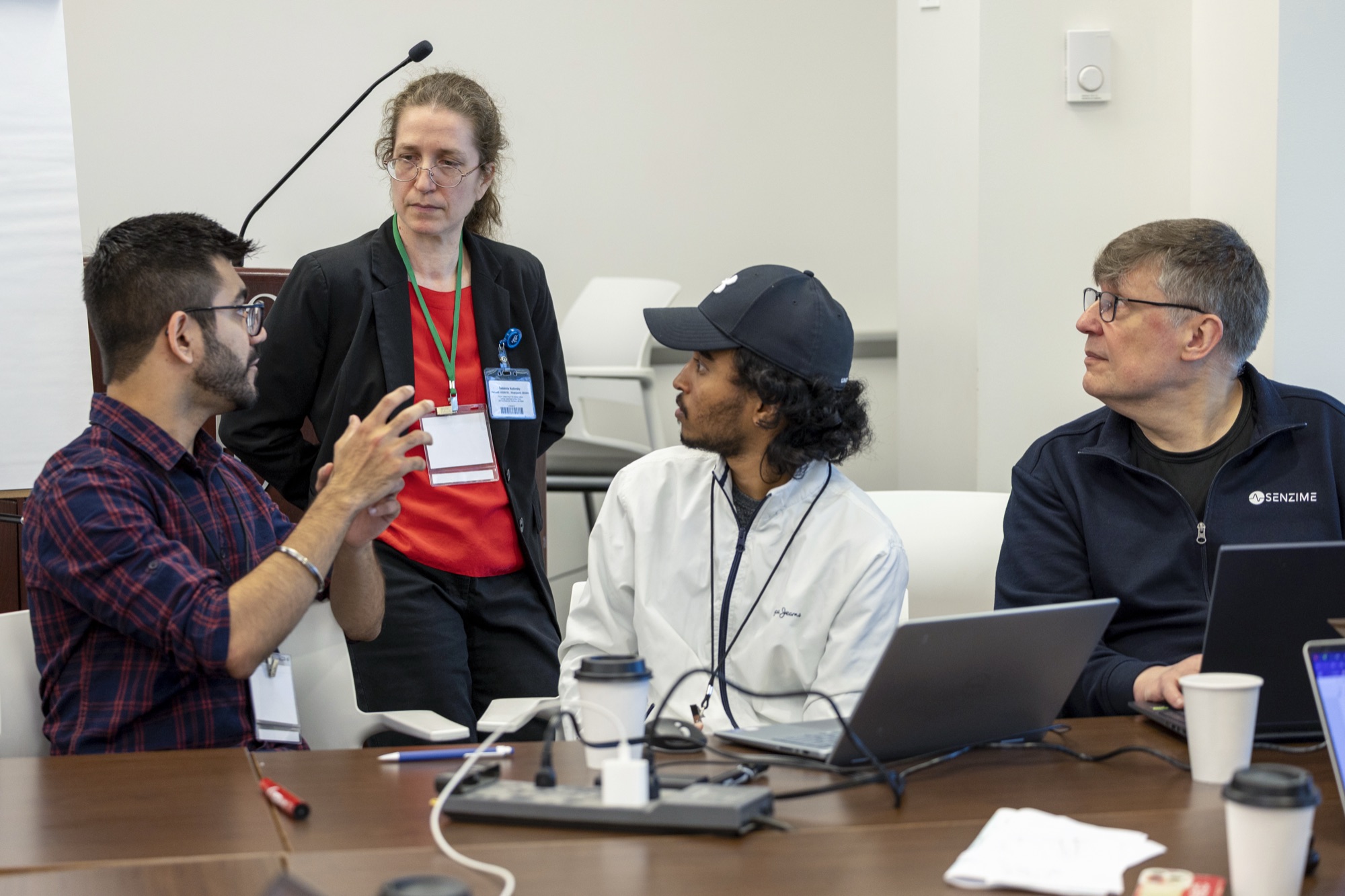
Datathon banner A team at work A mentor moment Group discussion
  • Clinicians · data scientists · students — and a plain-English data agent, so non-coders could query 20 TB
  • Then: a predictor agent read the full trace and guessed each team’s work — before they presented
What the machine saw — and what it missed

Impressive — or uncomfortable: most of what we build is predictable from our keystrokes.

It saw
6 / 9 problem statements
5 / 9 methodologies
~70% of the variables teams used
It missed
Every methodological innovation born in team discussion:
the causal forest · the palliativeness score · the trial emulation
28.7% of teams’ time — clinical discussion & study design — left no digital trace
63% of SQL was discovering & quality-checking data — only 0.9% was final dataset assembly

The build is a discussion punctuated by SQL — the thinking, not the typing.

Where the value lived

Mentors
4 of 9 teams materially pivoted · 19 of 33 credited a mentor — “this won’t work, and here’s why”
The patient voice
The most acclaimed result — a palliativeness signal ~2 days ahead of the chart — came from a parent’s lived story, not a query
The human catch
The weekend’s one data-leakage flag (oliguria “predicting” AKI) came from a human reviewer — not a pipeline
The new failure mode
When agent and SQL disagreed, some teams treated the agent as ground truth — lower barrier to engagement, lower barrier to false confidence
Honest credit: the agent widened participation — up to 8 of 9 members engaged vs. one person typing 91% of the queries.

The bottleneck is governance — your wheelhouse

Model power already startlingly capable GOVERNANCE validate · monitor · calibrate · audit · keep a human in command · the bedside the narrow part is not the model — it’s everything that makes the model safe
  • Governance at the bedside is a clinical-judgment problem — not a computer-science one
  • The best governors are the people accountable at the bedside — that’s you

Your three questions

You don’t need to build these systems — you need to interrogate them.

Q1
Where was it validated, and on whom — anything like my patients?
the Epic Sepsis Model lesson
Q2
How was it scored — could the scoring be flattering it?
the AI Clinician lesson
Q3
When it fails, will I be able to see that it failed?
because it will

Ask these with confidence and you are already a competent governor of clinical AI — that literacy, not coding, is yours to own.

How the job changes

Automates ↓
  • Continuous monitoring
  • First-pass synthesis
  • Watching one number all night
Appreciates ↑
  • Judgment past the guidelines
  • The family conversation · the exam
  • The override — and the new skill on top: governing agents (failure modes · auditing · keeping them honest)
“To get deskilled, you have to be skilled first. My concern is the generation that never got there.”— Pablo Moreno Franco · Mayo Clinic faculty, at the datathon

Train deeply — the AI literacy sits on top of clinical mastery, never instead of it.

To sum up

  • An agent isn’t a model — it perceives, reasons, acts, is governed, in a loop
  • Deterioration is a failure of attention and action — sense continuously, then act
  • Adoption is the science — the unit is model + human + workflow
  • Governance is a clinical skill — and it’s yours
  • The load-bearing parts are human — and they leave no log
SENSE REASON & ACT GOVERN …and stay the most significant asset in the room.
Thank you · Q&A

Welcome to fellowship —
this field is yours to govern

QR code linking to these slides
Take the slides home
ai-augmented-intensivist-bootcamp.pages.dev

References

1. Wong A, et al. JAMA Intern Med 2021 — external validation of the Epic Sepsis Model (AUC 0.63, ~38k hospitalizations).

2. Komorowski M, et al. Nat Med 2018 — the AI Clinician (RL for sepsis fluids/vasopressors).

3. Gottesman O, et al. Nat Med 2019 — guidelines/critique for RL in healthcare.

4. Jeter R, et al. arXiv:1902.03271 (2019) — off-policy critique of the AI Clinician.

5. Adams R, et al. Nat Med 2022 — TREWS mortality result.

6. Henry K, et al. Nat Med 2022 — TREWS adoption & human factors.

7. Boussina A, et al. npj Digit Med 2024 — COMPOSER ED deployment (−1.9 pts mortality).

8. Jabbour S, et al. JAMA 2023 — automation bias: biased AI dropped clinician accuracy 73%→~62%.

9. Finlayson S, et al. NEJM 2021 — dataset shift.

10. Bhattacharyya A, et al. — 2026 Mayo Clinic Datathon, manuscript in preparation (Mayo Clinic Proceedings).

Voice
Auto
Notes